Pain in an emergency situation setting gets here with messy context. It turns up entraped under dashboard plastic, in a rugby shoulder half out of its outlet, in a dialysis client with a hip crack on blood thinners, or in an overwhelmed elder who can not discover the appropriate words. The difference in between a chaotic scene and a regulated handover typically comes down to two points: exactly how well you can evaluate discomfort, and how deftly you can manage it without making the patient worse. PUAEME008, commonly known as Provide Discomfort Administration, exists for that specific factor. It distills core emergency situation pain administration skills right into a focused, practical structure that applies throughout paramedicine, first feedback, nursing outreach, and allied health in area environments.
I have taught and used this material in contexts that varied from city roadway injury to remote mine sites. What adheres to is a based, practitioner's overview of PUAEME008 provide discomfort administration, with enough detail to help you evaluate whether a pain monitoring program or discomfort administration qualification training course based on this device is ideal for you or your team.
What PUAEME008 actually covers
At its heart, the system builds skills in three domain names: risk-free analysis, effective analgesia choice and distribution, and ongoing reassessment with documents. Unlike more comprehensive pain administration advanced pain management course courses that dive deep right into chronic discomfort theory or multispecialty pathways, this is emergency pain management. The emphasis rests squarely on quick assessment, fast-acting treatments, and vigilant monitoring.
Most suppliers provide PUAEME008 as a short course suffering management that runs 6 to ten hours of in person time plus pre-reading, with hands-on method threaded through case scenarios. The entry bar differs slightly by jurisdiction and employer, however candidates are usually existing first -responders, firemans, lifesavers, or wellness workers with some medical direct exposure. The certificate training course in pain monitoring at this degree is not an alternative to paramedic training nor a certificate for independent narcotic management. It equips you to add to much better analgesic treatment within your scope, and to function safely under local protocols.
Common capacities analyzed under PUAEME008 provide pain monitoring include: conducting discomfort analyses using standardized tools, acknowledging warnings that necessitate immediate escalation, picking non-pharmacological strategies, and providing allowed medicinal representatives under direction or protocol. It additionally consists of post-intervention evaluation, side effect monitoring, and clear handover.
The actual value of organized assessment
When a person winces and grabs their ribs, it's tempting to go directly for the gas or the IV. Withstand that impulse. A structured analysis normally saves time and prevents mistakes. In method, I secure my method on a basic triad: mechanism, pattern, risk.
Mechanism maintains you honest about what forces were included. A low-speed loss onto an outstretched hand can still cause a scaphoid crack with deceptively subtle signs. A rollover collision suggests multi-system injury up until proven otherwise. Pattern asks how pain behaves in time and with activity. Is it sharp, throbbing, burning? Does it emit? Exists disproportionate discomfort to light touch that means area disorder? Threat concentrates on the individual's physiology and context: anticoagulants, kidney illness, respiratory system concession, previous analgesic allergic reactions, intoxication, or language barriers.
I still use the 0 to 10 numerical score range since it functions across ages and cultures much better than any kind of option. For nonverbal people, the Faces Pain Range or empirical tools like the FLACC (face, legs, task, cry, consolability) score aid transform behavior right into a useful measure. What issues is not the solitary rating, but the pattern and correlation with your interventions.
Small details pay dividends. Ask, "What would certainly be an acceptable pain degree for you now?" Numerous people will claim 3 or 4. That becomes your real target, not a theoretical no. Clarify what they have actually currently taken, including over-the-counter medications, so you don't pile dosages inadvertently. File the moment, dosage, path, and individual action in a way that transfers easily to the receiving team.
Non-pharmacological actions that in fact work
People price cut non-drug approaches since they appear soft. Succeeded, they are fast and powerful, and they decrease the amount of drug required. I have watched a fracture individual go from a discomfort rating of eight to five within 2 mins just by boosting splinting and making use of coaching methods for breathed in analgesia.
- Rapid positioning and immobilization: Rearrange to comfort early, not after you have actually set up all the devices. Splint joints over and below a thought fracture. For shoulder misplacements, a straightforward sling and swathe decreases muscular tissue convulsion and safeguards neurovascular structures. Ice or warmth: In the area, ice is a lot more offered and dependable. Cover it to stay clear of skin injury. Ten to fifteen mins acquires time and aids with swelling. Pressure and elevation: Venous mud responds to pressure. A sprained ankle joint responds to gentle compression and elevation if it does not worsen pain. Guided breathing and coaching: When using inhaled analgesia, don't just hand the device to the client. Demonstrate, then trainer a consistent tempo of breaths. People that hyperventilate through pain waste the advantage, so keep them paced and engaged. Environmental control: Reduce bright lights and noise. Provide the patient a sense of control by discussing what you're doing following. That alone decreases anxiety-driven pain amplification.
These techniques are core to emergency discomfort monitoring since they are safe throughout a wide range of conditions and can be initiated quickly, also while pharmacology is being prepared.
Pharmacological alternatives within scope
Medication options in PUAEME008-aligned pain administration training vary by regional protocols, however generally include clear advice on 3 courses: inhaled analgesics, oral non-opioids, and, in some services, parenteral options under direction.
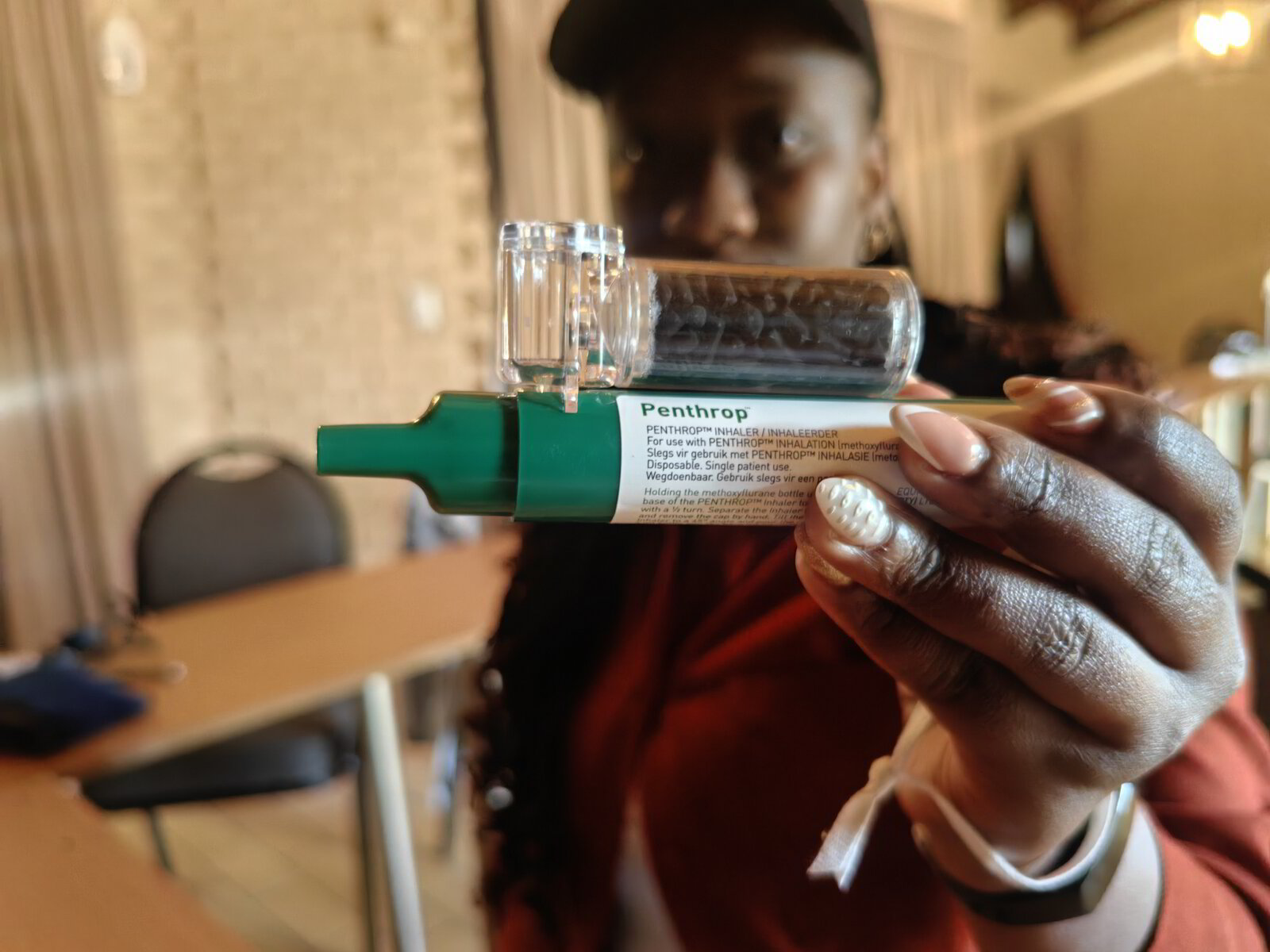
Inhaled methoxyflurane continues to be a favorite in Australian pre-hospital take care of moderate sharp pain. The onset is quick, the tool is mobile, and the titration is patient-driven. It is except everybody, specifically if there are contraindications like renal disability or hypersensitivity, and you should appreciate optimum dosage limits. Training strategy establishes efficiency greater than many recognize. If the individual takes superficial, erratic smokes, they will report "it's not functioning." A calmness, steady inhale with the exhaust properly fed on gives regular relief.
Oral anesthetics such as paracetamol and NSAIDs are usually secure and effective when the client tolerates oral intake and there are no red flags like believed GI blood loss or kidney compromise. The catch is dosage stacking since people self-medicate prior to you get here. Validate timing and quantities. For a lengthy transfer, early dental agents can smooth the experience, while you layer various other techniques on top.
Opioids require regard. In some settings, the device of competency enables administration under medical administration, standing orders, or straight guideline. The arguments around opioids in some cases overshadow their legitimate role in injury and severe acute pain. The trade-offs are uncomplicated: make use of the lowest reliable dosage, enjoy the respiratory rate and mental standing, and treat nausea proactively when suitable. Naloxone ought to not be a theoretical idea; be competent in its usage. If you do not have authorization for opioids, focus on optimizing what you can do, and escalate early to teams who can bring them.
Adjuncts like ketamine sit in sophisticated procedures as opposed to standard PUAEME008, yet you should understand their location. Dissociative analgesia assists in entraped patient extrication or major fracture reduction when opioids alone fall short, with a security account that preserves air passage reflexes in most cases. This is not a laid-back add-on. It needs training, surveillance, and a group comfy with the psychoperceptual effects that can unsettle both individual and provider.
Safety, contraindications, and the art of stating no
One of the hardest abilities to teach is not what to carry out, but when to keep back. Pain relief should never obscure the analysis picture in time-critical conditions, and some techniques merely raise risk.
Examples that require care or alternatives:
- Abdominal discomfort with peritonism: gentle titration is fine, yet avoid deep sedation that could mask damage before surgical review. Head injuries with altered degree of awareness: focus on air passage and perfusion. Sedation can shadow neurologic assessment, so titrate sparingly and document baseline GCS with subsequent changes. Hypotension or shock: opioids can go down the blood pressure additionally. Stabilize perfusion first. Think about inhaled choices or non-pharmacological measures while attending to the cause. Late pregnancy: inspect medicine safety for both mom and unborn child. Setting left lateral to minimize aortocaval compression. Renal or hepatic disease: doses and options shift. NSAIDs commonly relocate off the table in kidney compromise. Methoxyflurane is contraindicated for those with known kidney problems in several protocols.
Saying no is less complicated when you can claim yes to another thing. Deal ice, immobilization, peace of mind, and time-limited breathed in analgesia while you rise treatment or look for clinical direction.
Documentation that helps the next clinician
A great handover is a care treatment in its own right. The getting group's ability to continue secure analgesia rests on what you share. I make use of a psychological template: what pain, how much, what transformed, what we gave, what happened next.
Include system, pain rating fad, relevant comorbidities, allergies, and precise drug information with time marks. If a client records negative effects such as queasiness or wooziness, include that. When non-pharmacological actions help, state so, due to the fact that it sets the expectation for proceeded usage in the ED.
Clear documentation is vital for any type of discomfort administration certificate, both as an evaluation need and as a specialist behavior. It protects the client first, and it safeguards you.
Communication and approval under pressure
Emergency scenes are noisy, disorderly, and often public. Pain magnifies concern, and concern can either rise or settle depending on your interaction style. Begin by calling what you see. "I can see your ankle is puffy and that movement really harms. I'm mosting likely to aid you get more comfy." After that clarify the strategy simply put, concrete actions. Offer choices when possible. "We can utilize a rapid breathed in pain relief currently while we prepare a splint. Would certainly you like to try that?" Clients who really feel a sense of agency often require less drug and cooperate even more completely with immobilization and transfer.
Informed permission in the field indicates ordinary language and comprehension checks. If the individual is not qualified, job under suggested consent within your methods and document the rationale. For youngsters, involve caregivers while maintaining primary concentrate on the child's comfort and security. For non-English speakers, use interpreter solutions if offered by phone, or lean on aesthetic demos and calm pacing.
Scenarios that evaluate judgment
The worth of discomfort management training courses ends up being apparent in edge instances. A few that persist in evaluations and reality:
- The caught driver with pelvic discomfort and falling high blood pressure. Your ideal analgesic could be a pelvic binder applied early, with careful titration of inhaled or IV agents while you lessen activity. If ketamine is within your extent, it can support extrication without deep breathing depression. Over-sedation in a restricted room transforms a rescue right into an airway emergency. The elderly person with a neck of thigh fracture who is tough of hearing and frightened. Gentle description, cozy coverings, an inside story with padding, and inhaled analgesia typically outmatch hurrying for an IV in a cramped bedroom. If you have fascia iliaca block ability via a sophisticated path, the relief can be transformative, but it sits beyond the regular PUAEME008 scope. The rugby player with a shoulder misplacement and vasovagal propensity. Set them semi-recumbent, trainer their breathing, supply breathed in analgesia, and incapacitate. If relocation isn't in your scope, don't try to be a hero on the sideline. Excellent discomfort control and secure transfer defeated a risky attempt. The recognized opioid-tolerant patient with an extreme arm or leg injury. Basic dosages might do little. Stack modalities: ice, splinting, breathed in analgesia, and, if licensed, greater yet carefully titrated opioid dosing with close tracking. Establish expectations that full relief might not be possible, but purposeful reduction is. The child with a lower arm fracture. Youngsters react wonderfully to good splinting, distraction, and inhaled analgesia. Allow them experiment the gadget. Welcome a caregiver to rest at eye level and mirror the breathing pattern.
These cases expose the core truth: method expertise matters, therefore does judgment. PUAEME008 trains both, utilizing simulation and feedback rather than rote checklists alone.
Monitoring and review: catching troubles early
Analgesia does not end with management. Efficient emergency situation pain management suggests you look for both healing effect and negative effects. Track breathing rate, oxygen saturation if offered, degree of consciousness, and discomfort score at reasonable periods. Utilize your eyes and ears. A patient whose sentences shorten between breaths is refraining fine, even if the screen looks stable.
Nausea is common after opioids and occasionally after breathed in agents. Treat early when procedures permit, provide emesis bags, and protect the respiratory tract. It is far better to give an antiemetic than to remove a mask short courses in pain management mid-transport to handle sudden vomiting.
Over-sedation needs swift, definitive action. Boost, sustain air flow with airway complements and bag-mask if needed, and think about reversal representatives when in scope. Record the sequence plainly. Avoid the catch of chasing after drowsiness with duplicated turnarounds that precipitate serious discomfort and agitation unless respiratory tract defense demands it. Go for a safe happy medium where the client is arousable and breathing well.
Competency, certification, and where this fits in your career
For many carriers, PUAEME008 is a stepping rock instead of a location. As a discomfort administration certificate course, it certifies functional capability at the sharp end of treatment. It pairs well with sophisticated injury care components or with professional discomfort administration programs for nurses and discomfort management programs for physiotherapists who operate in severe settings like ED triage, outreach centers, or sideline and occasion medicine.
If you are seeking a discomfort administration certification in a wider feeling, recognize the landscape. There are pain monitoring training courses that concentrate on chronic and multidisciplinary treatment, integrating psychology, rehab, and interventional procedures. Others, like PUAEME008 give pain administration, laser know frontline, short, scalable skills. Both have value, however they serve different problems. A clinician who regularly manages delicacy cracks in a neighborhood medical facility may take advantage of both: emergency pain abilities for the initial stage, and chronic pain competencies for the weeks that follow.
For registered nurses, pain management training for nurses improved this unit enhances triage performance, person contentment, and security with standing orders. For physio therapists, pain monitoring training courses for physiotherapists that include severe injury assessment and non-pharmacological strategies complement guidebook treatment skills and improve sideline and center choices. Companies typically value the mobility of a pain administration accreditation course that lines up with recognized proficiencies, particularly when onboarding mixed groups for events or remote postings.
Training format and what to search for in a provider
Not all discomfort monitoring training is developed equivalent. Seek a program that emphasizes hands-on exercise with reasonable situations. You ought to entrust muscle memory around breathed in gadget configuration, splinting, safe lifting and positioning, and the choreography of providing discomfort relief while handling scene logistics. Substitute clients who can offer comments on interaction add worth, because tone and pacing change outcomes.

Quality providers update web content as methods advance. Ask just how they manage range differences between regions, and whether they supply pathway-specific choices. Seek structured evaluation that consists of written knowledge checks and observed practicals. An excellent course equilibriums the list with training and judgment. If the course is primarily glides concerning discomfort theory without gadget handling, you will not be ready when it is dark, raining, and your individual is wedged under a fence.
For those time-poor and balancing rosters, brief training courses in pain administration that blend pre-course eLearning with a focused in-person laboratory are efficient. Confirm that the pain monitoring certification aligns with your solution demands which the providing body is identified for conformity and audit purposes.
Legal, moral, and social considerations
Pain is universal, but our actions to it are not. Cultural standards shape just how people share pain and what they get out of care. Some under-report pain to appear calm. Others use vibrant expressions that review as distress however mirror cultural idiom. Listen greater than you talk, and prevent labeling individuals as "medication seeking" in intense contexts based on expression alone. Your paperwork needs to be factual: observed actions, reported discomfort, treatments, and response.
Legally, method within your scope and your solution's professional governance. Store and get rid of abused substances according to policy. Tape-record batch numbers and wastage where needed. If standing orders need alert to a medical policeman, do it and log the moment. These are not administrative obstacles. They are safeguards that maintain you and your people safe.
Ethically, make the individual comfy while protecting future diagnostic clarity. We can soothe enduring without masking the signs we need. The even more exact your documents and reassessment, the easier this equilibrium becomes.
Building a personal toolkit
Every company creates a tiny set of routines and tools that make discomfort administration smoother. Mine includes pre-charged breathed in analgesia sets, 2 sizes of slings conveniently obtainable, soft cushioning for splints, extra emesis bags clipped where I can reach them with one hand, and a psychological manuscript for mentoring breathing that I can deliver even when the scene is loud. I exercise the script up until it is automated. "I'm going to help you take sluggish, deep breaths utilizing this mouthpiece. Take in as I count to three, hold for a moment, after that out. Allow's do three with each other." It appears straightforward, yet it keeps me and the individual in sync.
I additionally maintain a firm routine of checking the time before and after each intervention and claiming it aloud for the record. "Methoxyflurane started at 14:36." The habit produces far better notes and tighter care.
Where PUAEME008 sits in the larger picture
If you zoom out, pain administration training is not concerning going after ratings to no. It is about feature, safety and security, and self-respect. A client that can endure a relocation from floor to cot without wheezing or protecting is much less likely to undercut throughout transfer. A child that trusts you with the mouthpiece will approve a splint and enable an IV without a struggle. An older that comprehends why the room is maintained peaceful and dim might clear up enough to relieve muscle mass stress and lower requirement for sedation.
PUAEME008 is a concentrated system, however it punches above its weight because it modifies the tempo of care. When you obtain the first ten mins right, every little thing downstream has a tendency to go much better: clearer diagnoses, less problems, shorter ED keeps. That is why employers typically focus on a pain administration certification in onboarding for occasion medicine teams and remote -responders, and why refresher training every year or 2 makes sense also for seasoned clinicians.
Final ideas for prospective learners
If you are evaluating a supply discomfort monitoring training course against other competing needs, look at your common instance mix and your weak points. Do you wait with breathed in devices? Do you stumble splints under stress? Do you document the trend, or simply the dosage? A great pain management program will tighten those links in your chain. If you intend to move right into advanced duties, the certification supplies a clean structure for additional consents and advanced modules.
For groups, train together. Discomfort alleviation functions best when everyone understands their function: that trainers breathing, that takes care of the splint, that documents, and who enjoys the display. Rehearse transfers in confined areas, in reduced light, and with simulated equipment failures. Those reps pay off when the call comes and the client is trusting you to bring not only the medicines, but the calm.
Emergency pain management is a craft. PUAEME008 provides you the vital devices, yet craft comes from use. Choose them up, method purposely, and afterwards go make tough moments easier for individuals who fulfill you on poor days.